We are literally living in a pandemic, it’s necessary to check up on each other.
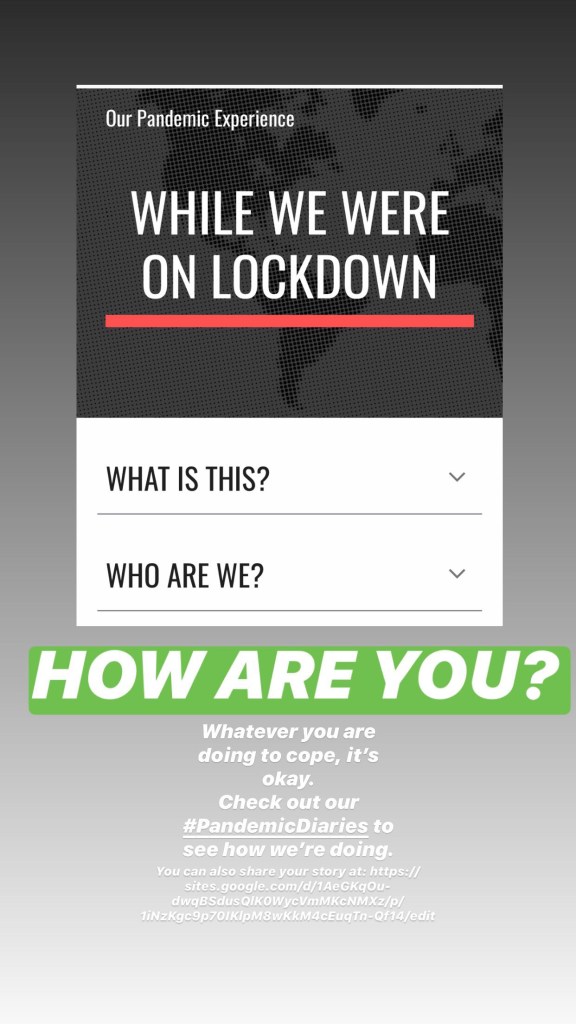
This is what our blog is promoting. Presenting our Pandemic Diaries: While we were on lockdown. Flip through its pages and see how we have our own ways of coping. One’s sentimental of her last street adventures, another is making up to those she wasn’t able to bond with due to her busyness, another is making wild guesses about how the world is going to be in the remaining months of the year, and one is just letting off some steam with all that’s going on. Regardless of whatever you’re doing to make sense of all this, it’s okay. The whole world is yet to make sense of it, either.
The group promoted the blog in a platform where people frequently post how they’ve been: Instagram. Facebook is a website for memes and familial interactions, Twitter is the voice of movements, whilst Instagram is… a diary.
A screenshot of how we marketed our blog.
Upon sharing our stories to our followers, I first realized that our theme is a substantial initiative in normalizing the fact that we have our own ways of coping. There’s no shame in eating, binging The Office, or just crying it all out. Second, Instagram is the best platform because people are much more unfiltered there. On Facebook, people are a bit unfiltered because their families are there. Twitter these days, as mentioned, has been a platform for movements like #HijaAko and #BlackLivesMatter– which will make our initiative out of place. Whilst fighting a pandemic, or a civil rights movement, it’s important to ask the most basic questions: How are you?
Props to all of us who have been surviving the anxiety, uncertainty, loneliness, even the boredom in our homes. My enhanced community quarantine (ECQ) experience has been rather uneventful— except for my mind. Staying at home made me ponder around the possiblity of the pandemic’s extention until one of the chunkiest events of the year: the Holidays. How can season filled with gatherings, overcrowded malls, and fully-booked flights respond to the protocol to “STAY AT HOME”? Here’s a brain dump of what could possibly go wrong (or right) when we celebrate the Holidays a la Home Alone.
** These are just silly predictions, satirical to all that’s going on now. You can tell that my ECQ experience is very banal. You can either laugh at me with all this… or I get the last laugh. We’ll see. **
1. Christmas preparations won’t be as early as September anymore.
We Filipinos BRAG about how we’re giddy about the Holidays as soon as the —BER months commence. Not this year. We’ve been taking things day by day, affected by the uncertainty of this pandemic. Maybe the it’ll be gone by December, maybe it’ll get worse. Maybe we’ll get infected, maybe a loved one does. From planning Christmas party menus, we plan how to maximize the food we store at home. Daily or weekly survival will always be a priority. Instead of listing friends whom you’ll be getting gifts, why not check on them, remind them that they aren’t as lonely as they may feel?
2. Ecstatic ninongs and ninangs can finally get away from their inaanaks
They’re the most excited ones this season because they can finally hide away from you. No random inaanak suddenly storming their house (who’s Christening they probably didn’t even attend) for aguinaldo. They can just delivered-zone you and it won’t be physically awkward.
On a lighter note, the money can go to people who need it the most than we do. So many people are surviving each day, uncertain if they will even survive tomorrow. The spaces on your bank accounts can wait, but the spaces of a hungry stomach can’t.
3. But somebody’s sure to be there this Christmas…
He’s been to every office party, family reunion, barkada get-together, mall show, store, grovery, and Christmas special.
Jose Mari Chan’s soothing voice and loving smile is a ray of sunshine that people will need in a season like this. For so many years, “Christmas in Our Hearts” has given a hopeful tune that connects. Truly, music will remind us that no physical distance can keep us away from each other. You are not alone in all of this.
I’m sure everybody’s gonna wait for a Zoom video of him singing with a background of girls and boys selling lanterns on the street.
4. And if that isn’t enough, the Christmas carolers will come knocking
Our Christmas hitmakers, or Jose Mari Chan’s Christmas ensemble— led by Mariah Carey, will initiate a Christmas jam a la Global Citizen’s Together at Home with the Christmas hitmakers: Michael Bublé, Ariana Grande, Pentatonix, Justin Bieber, Train, Paul McCartney and the like. Of course, and most importantly, it’ll be a fund raising.
Props to our artists for showing the real meaning and essence of what art is: connecting and empowering amidst all adviersities.
While we anticipate this epic Christmas Zoom Party, here are the heartwarming performances of Together at Home:
5. Patti LaBelle finally does an updated rendition of “It’s Christmas”
WHERE ARE HER BACKGROUND SINGERS?! It’s a surprise that people don’t talk much about her performance during the 1996 National Christmas Tree Lighting in the United States. Those who remember her, though, love to have a laugh every year, coming across the video. More than the importance of preparation, Patti’s memorable performance tells us that it won’t hurt to just laugh it all out. If you’ve forgotten to laugh out loud from this pandemic, you have found the sign to do it now. We laugh not to forget, but to ease ourselves every once in a while. Then, we go back to facing the reality before us. But really, it would be fun to see her frustration of literally not having back up singers in an updated (online) performance.
6. No annoying kid carolers this year
No kids asking for coins for singing out of tune. I don’t have to go out every 30 seconds just to exclaim, “Patawad!” This is because for these kids, staying outside could cost their lives. This lockdown has placed so many lives at risk— some maybe of their stubbornness to stay outside, many because they had to go work for the day. It’s easy to call out people who go out in the streets during the ECQ— many of these people live, work, and play in the streets. A lot of them still haven’t received their justices from the violence slapped on their faces.
7. Leave it to nature to do the singing
If there is one thing amusing with this ECQ, it’s how nature is showing its wonder more recently. Different species of birds I’ve never seen before showed up at my backyard, simultaneously chirping in the morning day. Truly, Nature’s showing her glow when she’s not hurt, it’s about time that we connect to her in a more understand and loving way.
8. Those who can afford, will afford to have the most bountiful noche buenas
Christmas has always been a capitalist opportunity. If you have the money for food delivery and the capacity to purchase a queso de bola, roast beef, or whatever your Christmas staple is, then that’s fine. I hope that we remember that these delivery services: Grab, Lalamove, etc., as well as those in the groceries and restaurants over deserve the same applause we give our medical frontliners. Every order we make on our devices and telephones put the lives of these people on the frontline. We must take time to appreciate them (and not cancel on our orders!)
9. A Christmas message from the president which we don’t even know what time it shows
Is he gonna talk about COVID or is he just gonna rant about Christmas love? Will it be at 8 pm? Or is it moved to 11 pm? Oh, Roque just said it’ll be moved to tomorrow?
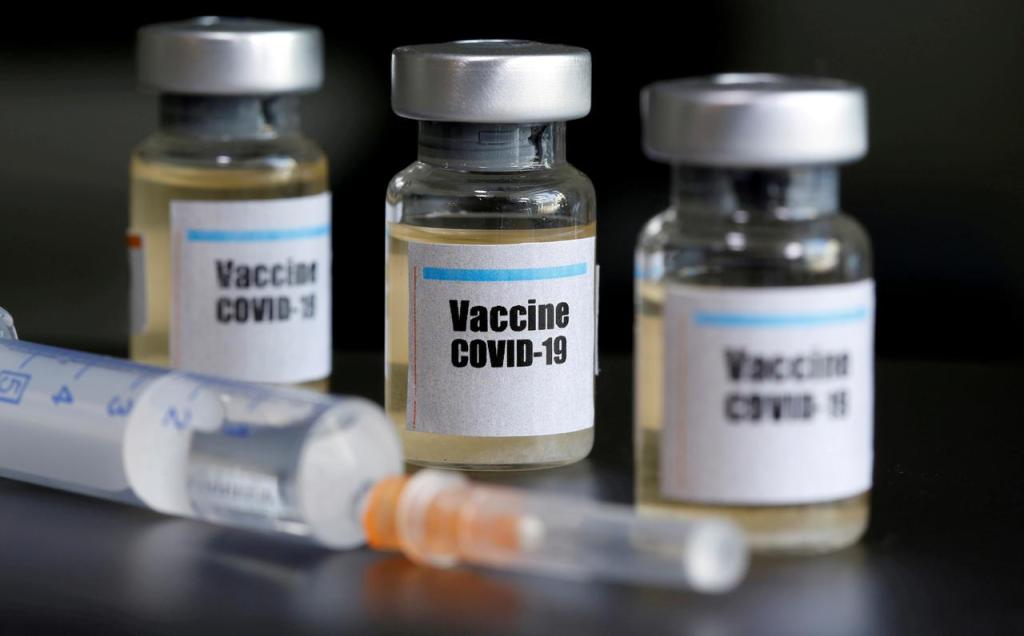
10. We’ll have the best Christmas gift ever: a vaccine
Whatever happens, there will always be light at the end of the tunnel. We have been taking things day by day, week by week, now, month by month. Our efforts are a beacon of our ability to recover. We, again, just have to take it day by day.
A COVID Christmas sounds amusing and scary, as we may have to alter familiar traditions upon living under it. We are going through his pandemic slowly but surely, and everyone’s daily health and well-being is a priority. Besides, we know that Christmas is a season of love and connection. Based on the situations mentioned earlier, Christmas is an opportunity for us to further reflect on how people are differently facing the pandemic… most especially the underprivileged. What is common among us, however, is our desire to brave through the uncertainties. This will give Christmas a whole new (and hopefully, sincerer) meaning.
But I really think that we have to make up for Patti’s anguish in ’96, because Patti is us under the ECQ. Troubled, but fighting through.
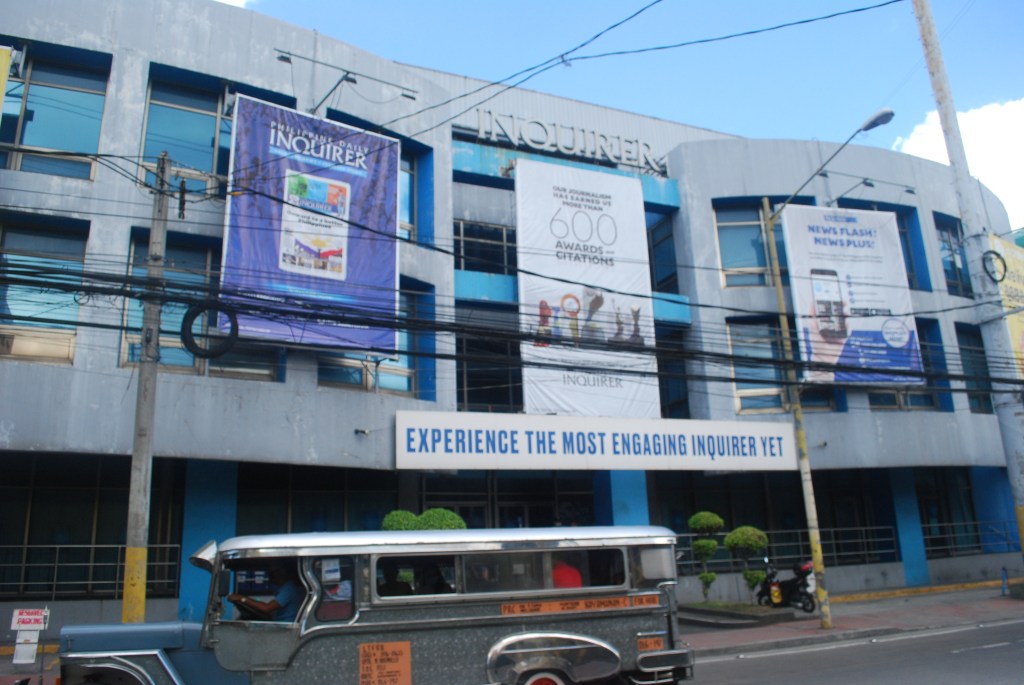
Last Tuesday, a surprise reply was seen on one of our email’s inbox, a notification from The Philippine Daily Inquirer! After a week of anticipating replies from various media companies, they were one of the few to reply back. Surprisingly, since The Philippine Daily Inquirer was our original target to interview for the fieldwork, luckily enough, we were able to push through with them.
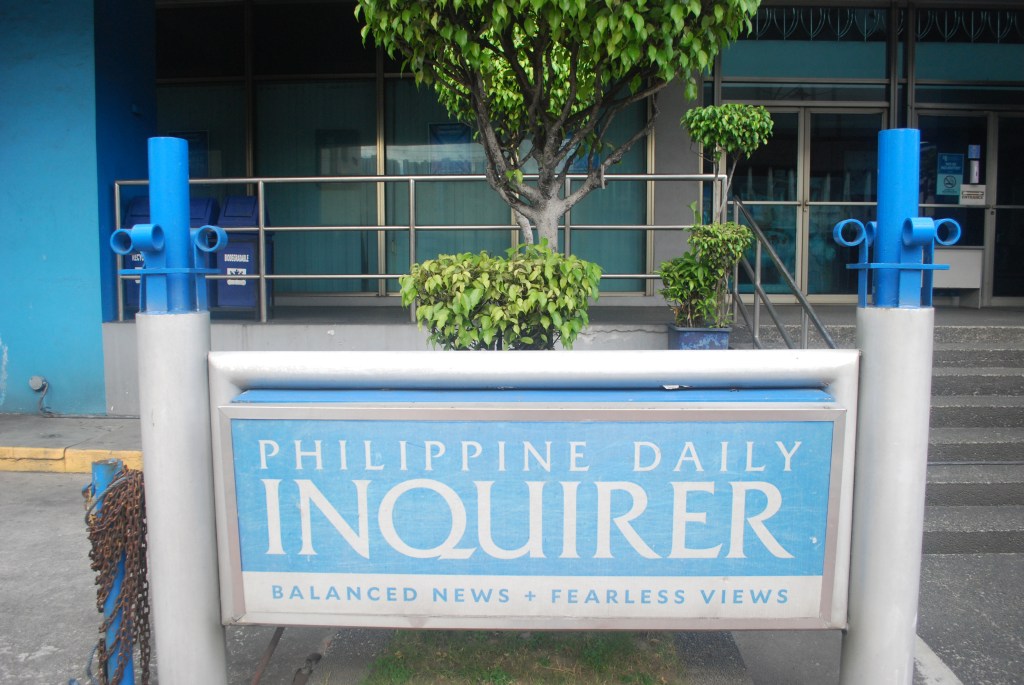
Stepping into the building on the day of the interview, we were greeted by the kind security guards and other office workers in the area. Soon, an assistant was leading us to our interviewee – Ms. Connie Kalagayan, the AVP for Corporate Affairs in The Philippine Daily Inquirer.
For our first question, we asked how they were coping with the pressures to attract readers, viewers, listeners, and alternative sources of news and information on the internet. Miss Kalagayan said that ten years ago, they already expected the trend of having fewer readers (not just in newspapers, but print in general) due to technological advancements. They had foreseen this trend happening in the United States and Europe, and so it follows that the Asia Pacific was next. They launched an online platform for the Inquirer to cope with the inevitable situation presented to them. Ms. Kalagayan has also mentioned that print media in the west have been continuously shutting down; In comparison to Asia and its countries such as in Singapore and Japan, where they value traditional ways of obtaining information. Citizens of the continent are still reading print media and consider sourcing information from the internet a just ‘supplementary’. In the Philippines, the challenge is not only found on the internet, but there is also a struggle in the economic factor.
As a follow-up question, we asked why they still continue to pursue and produce print media when they had their online platform to cope with the evolution of media. With that, she has explained that when their online platform launched, they realized that the main driver of their income was still print due to companies not wanting to put their ads online. The reason for this was because of how easy, accessible and convenient for viewers/readers to exit out of an ad by a tap or a click; therefore, it meant less profit for them. However, you may put them in newspapers without the option to ‘permanently’ delete it from your sight. Miss Kalagayan gave an example on why companies did not want to do so: when you are about to open an article online and an ad pops up, you are most likely to just exit the entire link of the article itself, but when it comes to newspapers, the readers have no choice but to see the ads. Three years ago, Smart, Globe and etc. took out their ads from print (which is one of their main sources of income from ads) but came back again just recently.
“…they realized that the people who are actually; have the spending capability ( which we now call the ‘boomers’) are actually still reading the print. And so if you need to get in touch with these people and engage with them; because they are the money spenders, the actual venue or platform is still print. And that’s the reason why we keep on doing print— there’s no money coming in mobile and digital. I mean there is money but very minimal.” – Miss Connie Kalagayan
Another challenge that Miss Connie Kalalagyan had mentioned and was pretty adamant about, was the role of the government on the media (in general). She did not specifically say in detail what were the causes of these concerns but in a nutshell, she told us that the government overall had been hard on the media lately, to the point that they question themselves if the story they were initially intending of covering was still worth pursuing; if they should still continue their own and the company’s mission and vision to provide REAL information for the people. It seemed to us as if it was an extremely risky situation they were in because she had also mentioned that at the expense of providing REAL information, in return they (the media) would be ‘attacked’.
Another key point that Miss Kalagayan had stated was that the COVID-19 is playing a huge role in the (media and) print business. She was stern in telling us that this outbreak is not only local but rather it is on a global-worldwide scale. An effect of the COVID-19, is that the stock markets are going down, therefore any business for that matter, follows its decline. An example she gave was the recent mass layoff that PAL (Philippine Airlines) needed to do to their employees due to the Corona Virus tragedy. The event had taken aback their business operation and therefore needed to cut down on manpower to make up for it. She said that it was an overall 360-degree turn not only for PAL but for all companies as well. Which brings us to the next question we had for Miss Connie – “How do they pay their employees despite all these issues and challenges?”
Despite the economic factors that Miss Kalagayan mentioned, one thing salient that she stated was how their salaries and the money-making aspect isn’t a hindrance for their writers to live up to their purpose. They find purpose and happiness in telling the truth. Regular employees get regular monthly salaries while correspondents and columnists are paid per article (similar to freelancing or project-based employees). Most of the time, the employees overlook the amount of their salaries because they love their work and jobs so much that they find purpose and happiness in telling the truth; which to them is already a reward in itself.
Due to the evolution of media, alongside the challenges that they face from the collective pressure of different factors, we also asked Miss Connie Kalagayan if they still had the ‘say’ in dictating the ‘agenda’ of the newsprint that they produce. She started off by proudly saying that the Philippine Daily Inquirer is already turning 35 years old at the end of the year. And with that, she also confidently said that they are an agenda-setter. Their definition of being an agenda-setter would be that they find news that is not or has not been covered by other companies. And the thing they do differently is that they thoroughly do their research on the material before breaking out the story. Unlike other newsprint media wherein their primary goal is to be the first to release or break the story. She said:
“That’s not the style of the inquirer. The style of the Inquirer is we study; because we would like to find out if this particular big story which can probably shake up the society, “Is this something that we need to come out of it now, or is it a matter of really researching and ensuring that these whistleblowers are really telling the truth?”; that these people implicated in this case are people that are untouchable. How can we make sure if they’re untouchable, how can we make sure that later on be given justice?”
Their style is to study content first because they want to stir the country where it should be.
“So yes, if your question is “do you care if we set the agenda?” Yes, we do. And the reason why we do it is not because to steer the Philippines as to where it should go but rather to steer the country where it is meant to be.”
Lastly, we asked Miss Connie how she sees The Philippines Daily Inquirer in the future.
Their goal in the future is that they want to continue to empower the Filipino people by giving them correct information and to stir them where they should be.
“In the future we hope to continue doing our mission of being able to empower the Filipino people and by empowering the Filipino, that is providing them with information and steering their emotions so that they create action. So we hope to continue doing that because we feel if a government or if a dictator again in the future will start to muzzle us and tell not to say anything then that again I think is going to be another darkness in our history because once that fort estate the media is censored by the government then that means that you don’t have a free society, So, we hope to continue doubt that even though we get threats, curses on tv.”
The media is a crazy world. There has been a growing confusion as to what the media is supposed to be. Today, anybody can disseminate news. Anybody can be a journalist. Why should the media exist, anyway? Why must the media sector be studied or listened to anyway? This story gathers journalists around the media sector to talk to us why the media still matters today.
The media is a public sphere. Funded by advertisers and business to survive, it is an area for discussion of different events that shape the way we live. The danger of this openness is its vulnerability to prejudice, misunderstandings, economic agendas, censorship, and control. An Xiao Mina expounds on this: “Without proper care, public spaces like the Roman Forum — designed first and foremost as a place for commercial and state business — can readily become places of exclusion, rumor, disease, politicking, exploitation and open violence as they steadily approach entropy.” Because of this, it is a must to emphasize that journalism is not simply an area for discussion. The media is the mediator. The aim of its open discussions is to first, ensure that everyone has access to information. The media has made efforts to adjust to the public’s time to deliver news. According to Sarah Marshall, late evening is peak time for active audiences. “An opportunity to engage audiences. When writing or creating products, editors, reporters, and UX designers should therefore consider the reader sitting up in bed looking at her phone.” With the rise of social media and audiences who comprehend information better through websites, mobile applications, and short news clips posted online, Rappler, Philippine Daily Inquirer, Manila Bulletin, Philippine Star, and many other news sites have established their online presence respectively. The goal is to find different ways to ensure that everyone gets information. This is written in Article 19 of the Universal Declaration of Human Rights, “Everyone has the right to freedom of opinion and expression; this right includes freedom to hold opinions without interference and to seek, receive and impart information and ideas through any media and regardless of frontiers.” Access to information is important because a free press is parallel to a free society. Access to information implies one’s right to freedom and self-government. You have the free will to act upon the information you have received. Most importantly, as a member of society, you have a responsibility to participate in whatever way you can, especially if the news constitutes a social issue. In this light, access to information is communal, a way to build society for the better.
Frankly, there’s a media hierarchy
How pressing would it be if not everyone had access to news? Sarah Stonbely enlightens us on this: “News inequality matters in the same way that unequal access to education matters: Without trustworthy, reliable local and national journalism, the democratic political system breaks down.” To emphasize, news inequality widens the gap among sectors of society. The call for participation will lower in volume, and problems will only be stacked on each other. In relation to the widening gap among people in society, under news inequality, those who have access to news can only participate. It is them, consequently, who will have the power and authority, strengthening the concept of privilege.“There are no voiceless people. There are only people whose voices the industry has chosen not to amplify.” Imaeyen Ibanga said. An example would be news on land ownership and use. A real-estate developer plans to build another condominium in Cavite. Because of their money and power, they can easily pass the news to people to attract buyers of their units. However, we don’t hear from the less privileged, or the farmers to cultivate the land to be used by the real-estate developer as their only source of income. Due to their lack of access to news, there is no awareness that the land they labor on will be taken away from them. There is no reason, subsequently, to speak up for their right to work, until construction workers arrive at the land and start throwing cement and hollow blocks on their crops. The aforementioned is a domino effect, encompassing issues on poverty, labor, and agriculture. We can credit news inequality for the lack of representation of less privileged sectors in society. Journalism is a bullet that mediate the gap among people in the public sphere.
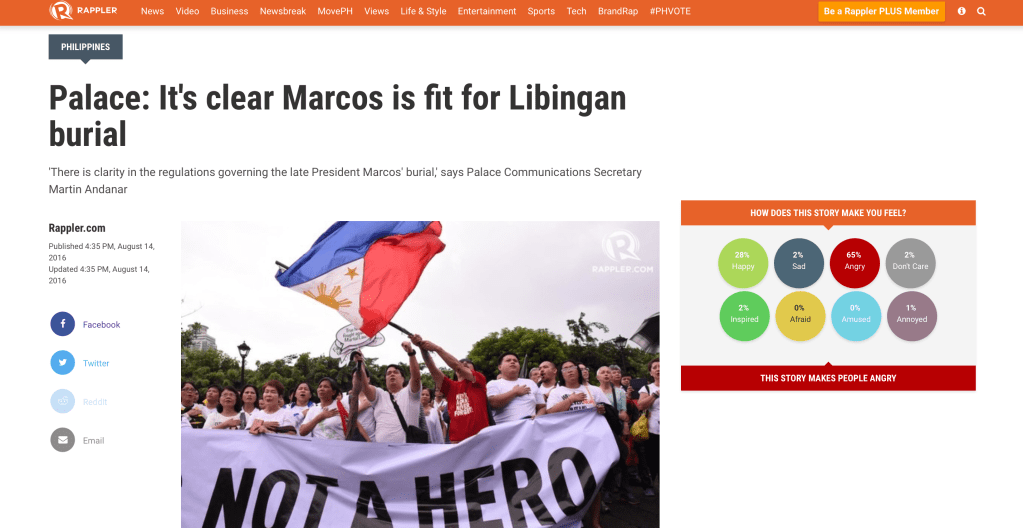
As journalism becomes the mediator in the public sphere, the way news is presented is very crucial to inculcate in readers’ minds that their participation in as a member of society is very crucial. The media is the agenda-setter. The media dictates what is important to talk about, and what details the people must know for them to govern themselves rightly. An example of this would be an article Rappler posted on August 14, 2016, entitled, “Palace: It’s clear Marcos is fit for Libingan burial”. It simply talks about President Rodrigo Duterte’s decision to lay former strongman Ferdinand Marcos’ body at the Libingan ng mga Bayani. Come to think of it, information about one’s place of burial must not really be a big deal. It is simply laying a body to rest. However, the news article frames the decision of the administration that the late dictator deserves to be treated like a hero:
“Last August 7, Duterte said that “as a former soldier and former president of the Philippines,”Marcos is qualified to be buried at the Libingan ng mga Bayani.
On August 12, the Presidentreiterated his view, saying, “Even if he is not a hero, he was a soldier. Even if he didn’t receive the medals, correct, but that is the record of another country. Why would I, in making a decision, refer to the records of another country? We have long ceased to be a vassal state of the United States. Tapos na ‘yan (That’s over). It’s history.”
The media and its inevitable power
Alice Antheaume affirms this, “It’s not just a matter of semantics: The ways journalists decide what they cover — and how they think about the shape of that coverage — has an impact on the world.” The media’s manner of framing the issue could be credited for the nationwide protests and revolts that followed Malacañang’s decision.On November 25, 2016, The National Day of Rage and Unity pushed through at the Quirino Grandstand in Manila. Mass actions simultaneously happened in Central Luzon, Southern Tagalog, Bicol, Cebu, Iloilo, Leyte, Roxas, Bacolod, Aklan, Cagayan de Oro, Iligan, Davao, Zamboanga, Sarangani, and Surigao. A lot of the participants in the rallies were younger generations, people who weren’t born between 1972 and 1986, with no firsthand experiences of the horrors of the Marcos regime. The youth felt that sense of purpose to participate with the Palace’s decision, voicing out their dissent. Framing gives the proper context of a news story. It then enables mass participation, manifesting representation, signifying that journalism is a public sphere, and not a privatized sector only.
But there are other powerful forces too
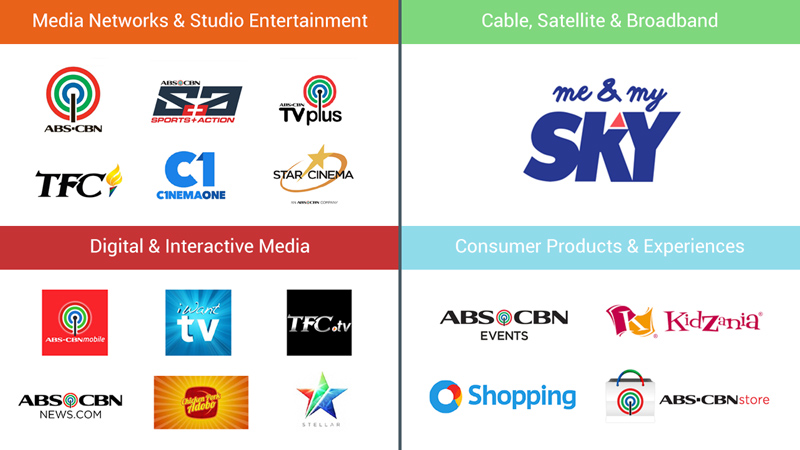
The media, however, instead of being a public sphere, has become a marketplace. It has become a venue for transactions, with envelope journalism becoming more prominent. Advertisements play a big role in funding newspapers, hence the many spaces advertisers take instead of reserving it for news. Another, newspapers have been owned by powerful conglomerates that control other businesses and sectors. Philippine Star is owned by MediaQuest Holdings, a conglomerate owning PLDT, TV5, Nation Broadcasting Corporation, and the like. ABS-CBN News, a reputable news source to the masses, is under ABS-CBN Holdings Corporation, which also controls different media channels/companies: radio (DZMM 630) sports (S+A), music (Myx, Star Records), film (Cinema One, Star Cinema). Joshua Darr reaffirms this “massive infusion of political cash into the media will benefit tech companies and cable news networks more than in previous cycles.” Instead of being the mediator that makes people complacent and aware of what’s happening around them, there is an unequal access to news, favoring those who are privileged to buy newspapers and be educated with media literacy. Instead of setting the agenda of what to talk about and how we must view facts, misinformation is a virus that spreads fast. Instead of being the agenda setter, the existence of other sources of news (due to social media) has caused confusion among the public on what to believe in and what is true. The lack of context and fact checking are two factors that result in this. Despite all this, what remains consistent is the zeal for service of journalists. What is emergent is journalists’ desire to make a public sphere, an open space for everyone to be informed and be represented. Heather Bryant notably said, “The question of how we save journalism (meaning newsrooms) will begin to shift to how do we save journalism (meaning the process).” We must go back to the three definitions of the role of media. It is through these characteristics that the media brings good journalism to the people.
The call to move ahead
Noticeably, the local and international media landscape is not just in charge of disseminating information to the people. It is in charge of fact checking. With the emergence of citizen journalism, it is a must for media practitioners to move a number of steps ahead.
There are a number of media organizations that stand by the mission to save journalism. One of them is the Philippine Center for Investigative Journalism (PCIJ). It is one of the most reputable media organizations, known for exposing Gloria Macapagal-Arroyo’s “Hello Garci” scam in 2004 and the Pork Barrel scam in 2013. First, they do not have printed copies of their stories, as they are in charge of funding investigative projects for both print and broadcast media. Another, they remain steadfast in fact checking despite the emergence of misinformation, as well as trolls who threaten how steadfast they can be. Not to mention, their address is not mentioned in their online sites for security purposes. Additionally, their office unlike other media organizations: a little office, with no big tarpaulins that have their name in bold letters. PCIJ remains predatory with caution, an example of staying true to bringing good journalism while keeping its eyes on the media’s signs of the times.
Today’s challenge in the media landscape does not only require good journalism. On the other hand, misuse of the algorithms of media can result in misinformation. There must be a balance between the two.
Far in the future, the media landscape will change. However, we need a public sphere. We need a mediator. We need representation. With all this, no matter what happens, the role of media will remain universal. They have to make their presence felt to stand the test of time.
A Twitter thread has become a medium to [transpose] information among users. Its structure is perfect in dissecting chunks of information. Its amazing how a series of bite-sized boxes can contain a discussion that you won’t need to sit through that banal History lecture. This is what the internet has done to us. Everything’s instant, everything’s meaty. All you have to do is sit and press the button/screen.
How else should I talk about the breakout of the internet & media than through a Twitter thread?
Through these instant but comprehensive discussions, you can learn so much in so little. Who knew units of information can revolutionize mankind? This is the generation’s greatest weapon and biggest need: Data.
Data has become a basic necessity for everyone, which is why this meme makes sense. Besides the food we eat, the esteem we build, the affection we receive, and the safety that secures us, data is the language we communicate.
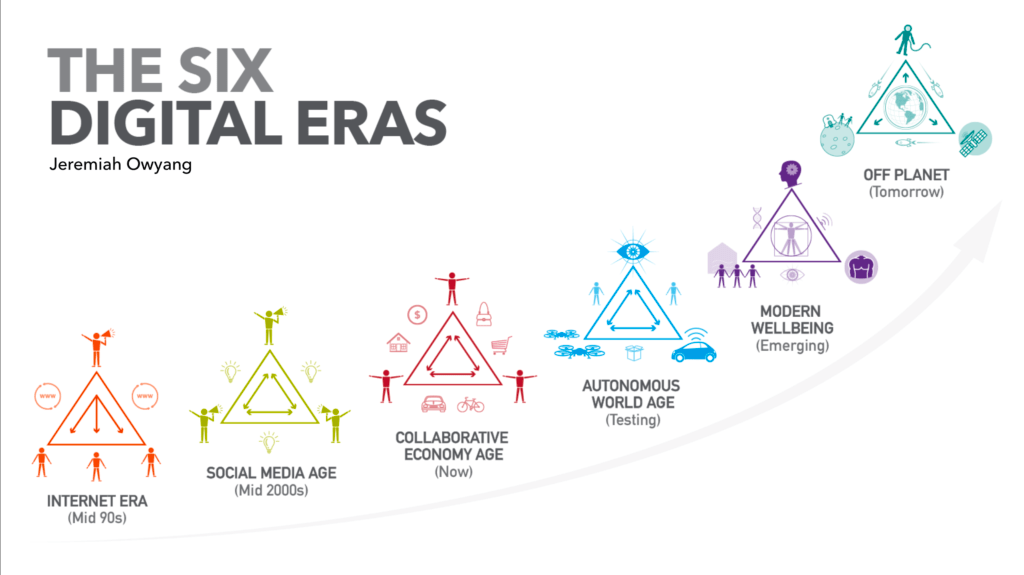
Data has helped us comprehend the natural world. It captures and monitors what our human senses cannot catch. This was how the internet started anyway. An algorithmic medium of spreading data, the internet was invented to create a mode of communication among the United States and its allied countries. Such top secret data was necessary for rival nations to not keep up with the Allied’s plans. The 1969 invention was revived in the late 1990s to be seen visually, birthing the Internet Age. The internet then involved spreading data in the form of personal communication. In the Social Media Age, social networking sites, namely Six Degrees (1997), Yahoo Messenger (1998), Friendster (2003), Skype (2003), Myspace (2003), Facebook (2004), Youtube (2005), Twitter (2006), and Omegle (2009) emerged. As the 21st Century continued, the internet didn’t just become a manner of communication. It was a medium of production and creation with the help of constant virtual interaction. The Collaborative Age saw the birth of G Suite, a cloud of different applications under Google, where users can collaboratively create documents (Google Docs), powerpoint presentations (Google Slides), spreadsheets (Google Sheets), websites (Google Sites), or a storage area (Google Drive). Additionally, applications Snapchat, Instagram, even Facebook created a feature where people in a certain location include a tag of the said location. The app would collate all posts into one tag, birthing a collaboration showing the different happenings in that certain location. Another popular example of such collaboration is when Youtubers collaborate with fellow Youtubers or people they know to create content that will entertain users. The internet has helped us utilize data to however we need it: casual interactions, work, academics, research, creativity, weight loss, travel guide, bookings, and everything in between. Its easy to say that we have controlled data to cater to our needs. However, as we go forward to the future, don’t you think its the other way around?
Kiev, Ukraine – October 17, 2012 – A logotype collection of well-known social media brand’s printed on paper. Include Facebook, YouTube, Twitter, Google Plus, Instagram, Vimeo, Flickr, Myspace, Tumblr, Livejournal, Foursquare and more other logos.
Twitter threads have influenced us to divide our attention to separated pieces of information. We take in information one by one and react to them one by one like a computer. Experts say we are already entering the Autonomous World Age. Human tasks are becoming more automated, tasks formerly done by people are now done by machines. Because of our growing reliance on machines, we have the tendency to put ourselves in their shoes, as our recurring goal is to make them do human labor. As we wire our brains into machines, its safe to say that the Modern Wellbeing Age is not far away. Losing track of our own humanity, we turn to technology to become more human. This age bears witness to apps that cater to physical, mental, emotional, spiritual, even sexual wellbeing. Runkeeper tracks weight loss and all other physical training. Headspace, Rootd, and Acupressure are notable anxiety applications. With our reliance on technology to explore the inner space is the same mindset in conquering the outer space. The Off Planet era may not be in the far future, as we have created an artificial [world] of the human and natural world. This artificial world we continue to curate wires our brains to be more robotic than human.
Our attention to data has affected how we communicate information. The media has adjusted to the signs of the times, creating content that minute yet jam-packed. Buzzfeed, 8List, and other media sites adopted a writing style called “Listing the vegetables” grouping information in the form of lists. The Philippine Daily Inquirer’s broadsheet front page has been designed in the style of a media browser, where news headlines are written in boxes, representing tabs of a website. Spotify provides different playlists, diving songs in different categories depending on the mood, and genre of each song. Our manner of communication has also been divided and categorized.
I bet you that this essay could be summarized in a Twitter thread. Data is the powerful weapon the 20th Century has produced and the 21st Century develops. The birth of the internet strengthened its power and wired us to think and function like data. This has changed the way we view and communicate information.
As the thread mentioned, “The internet is becoming more intimate and algorithmic.” As our exploration of the artificial world heightens, our human capacity to take in information becomes divided and categorized. Who knows what the rest of Silicon Valley has in store for us? All we have to do is press the Refresh button.
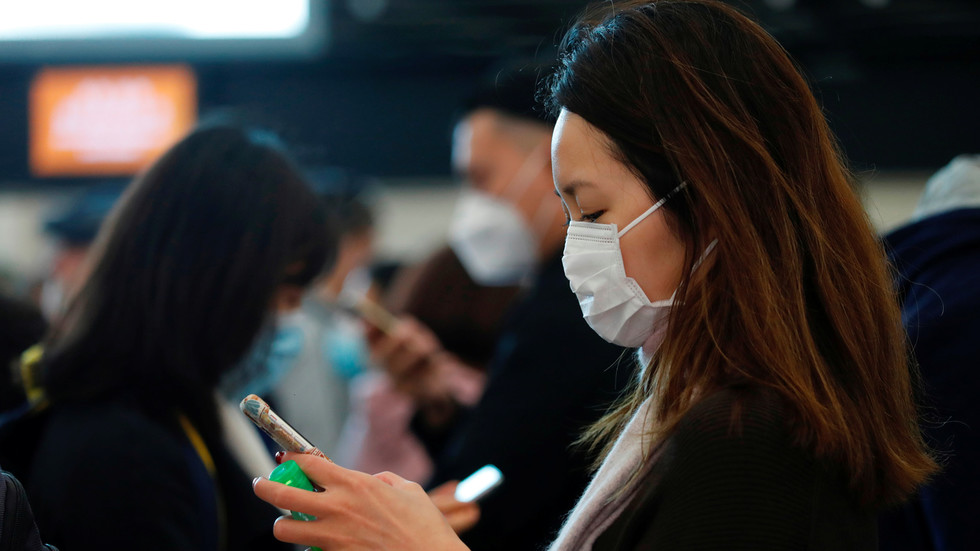
With over 12,069 cases and 259 deaths, the Coronavirus will not stop infecting the world anytime soon. Alongside this worldwide epidemic is another virus-like dispersal brought by the media. Misinformation, through advancements in technology and social networking sites, infects people’s minds to believe in false information.
Why is this alarming?
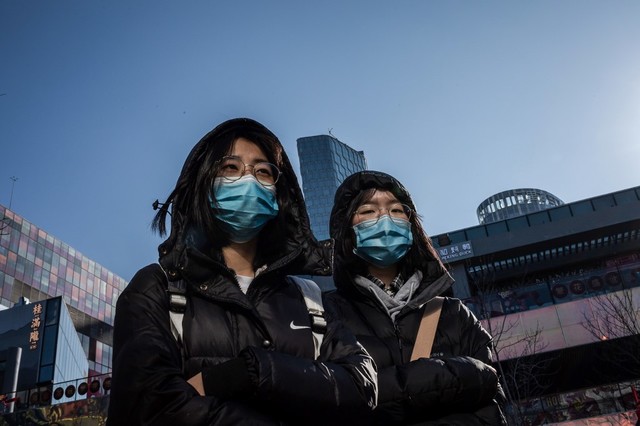
People wear protective masks as they walk outside a shopping mall in Beijing on January 23, 2020. – China is halting public transport and closing highway toll stations in two more cities in Hubei province, the epicentre of a deadly virus outbreak, authorities said on January 23. (Photo by NICOLAS ASFOURI / AFP)
Misinformation affects all fields and institutions: a nation’s culture, lifestyle, politics, demographics, and all forms of decision making. We decide based on information, and deciding based on the wrong information can harm us. Although becoming the frequent medium of misinformation, social media must not be branded as a completely toxic platform. It is the manner of usage that must be given proper focus. Because of the fast transmission of information, social media is an inevitable tool in becoming updated. It, therefore, must be cultivated to good intentions and good use.
It is important to tackle a story with substance and truth. There are three ways to tackle a good story: 1.) Verifying the information you use in writing the story. The data you use aren’t yours to begin with, which makes fact checking a necessity. In the case of the Coronavirus, scientists, public health experts, and researchers will give the correct information. 2.) Illustrations and graphics can be used, as not everybody could comprehend statistics and other scientific jargon. 3.) As mentioned earlier, social media can be an efficient tool for vigilance. Information posted and shared must come from official sources, not anonymous nor treacherous senders.
Medical staff members carry a patient into the Jinyintan hospital, where patients infected by a mysterious SARS-like virus are being treated, in Wuhan in China’s central Hubei province on January 18, 2020. – The true scale of the outbreak of a mysterious SARS-like virus in China is likely far bigger than officially reported, scientists have warned, as countries ramp up measures to prevent the disease from spreading. (Photo by STR / AFP) / China OUT
To summarize, the media, as seen in its name, is the mediator between institutions and the public. The media must have a similar understanding of the issue, so as not to feed stigmas, and contribute more to finding the solution to issues.
“It frustrates me that I can’t do it!” said the “frustrated performing artist” who’s proven herself wrong. Janina Clemente has crafted so many beautiful stories on the stage, while in the process of creating her own.
The 20 year old has fallen in love with the performing arts, unsure if it loves her back. She cites the triple threat label in theatre (manifesting talent in singing, dancing, and acting) as her basis. “Triple threat ako ‘cause I can’t do all three.” This girl who doubted her capabilities of wanting to become a Hollywood actress landed a lead role and a directing project. She’s the same girl who lacked the rhythm of a dancer but could do a gracious split. That same girl was also frightened by her biggest insecurity: singing; yet managed to land in her first role ever despite being asked to sing during her auditions. Despite these words coming out of Janina’s mouth, there is an invisible string that pulls her heart on her sleeve. Janina’s eyes narrow in shyness, but also in a passion that brings her life.
Janina takes on the lead role Laya, in Du La Salle 2K17: Rights Minus Wrong (Hindi Ko Pa Nakikita Ang Larawan ng Dagat).
It was these strong and creative eyes of hers that exposed her to the arts at a young age. Janina loved drawing and painting, fed by her interest in visual arts. However, just like many of us, we grow up, and our eyes slowly see how complicated the world is. Janina entered high school in St. Paul College, Pasig with nothing but the plan to make it out. It was her senior year that pushed her to take that leap of faith and land her first ever role in a production— the one that required her to sing. She may not perfectly land those notes, but she took note of this experience until entering college. In her first year at De La Salle University, she became a member of the DLSU Harlequin Theatre Guild. Janina starred in her first lead role, Laya, in Du La Salle 2K17: Rights Minus Wrong (Hindi Ko Pa Nakikita Ang Larawan ng Dagat). In her second year in the guild, she became the Associate Director for Du La Salle 2K18: Panatang Makabata (Ang Dyip Ni Mang Tomas). Extending her services to the organization besides the artistic aspect, she became the Division Manager for Finance that same year.
Janina in DLSU Harlequin Theatre Guild’s minor production, La Saglit 2K17.
Janina simultaneously writes two main stories: of others and of hers. As she scribbles, she looks up to inspirations that help her visualize the kind of artist she wants to become, as well as the kind of art she wants to create. The red and feisty Moulin Rouge! and Chicago are two of her favorite musicals. Hollywood’s resident cool girl and Katniss Everdeen herself, Jennifer Lawrence, is her spirit animal. She admits crying buckets over the 2016 film, Lion.
Janina is part of the original cast of DLSu Harlequin Theatre Guild’s Ang Huling Mambabatok, a telling of the life of tattoo artist, Apo Whang-Od.
Upon asking Janina of her upcoming passion projects, she talked about wanting to get to know her grandfather more. She wishes to translate to the screen the story of this well-traveled man and his many love affairs from his journeys. She wants to know how a vice-president of Philippine Airlines lives the life, and may teach us a thing or two about enjoying the beauty of today.
Janina in Bubblegum Rights, under DLSU Harlequin Theatre Guild.
Meet Janina Maria Margarita Clemente. She’s frustrated to scribble words of life on a page, but it was her frustrations that made her introduce Laya to the world. It was through these that she’s amplified stories that would’ve reached a single whisper if she didn’t put her heart out and set her eyes forward. Becoming inspired by Janina’s story, I have some words for her. First, the world would be thrilled by her grandpa-inspired adventure film. Second, I hope that she continues to craft these wonderful stories. However (and lastly), I can’t wait for her to unfold her biggest story: herself. Janina, you are that striking book humbly sitting on the shelf. We (yes, reader, I’m including you) will grab your wonderful book in a heartbeat.
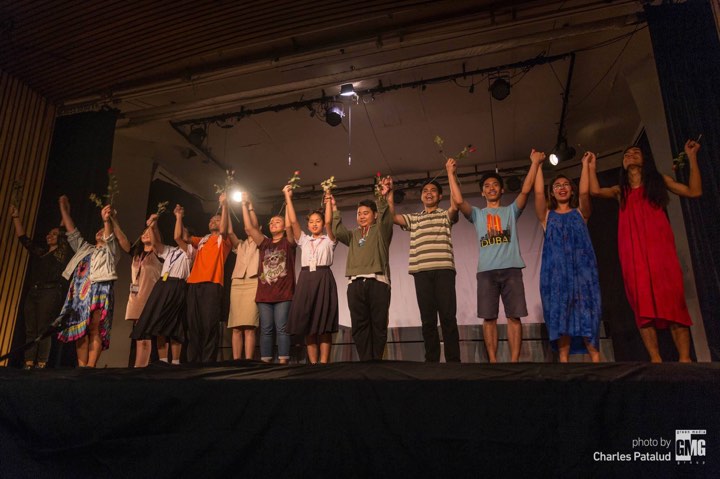
Janina and the cast and artistic team of Ang Dyip Ni Mang Tomas (from Du La Salle 2K18: Panatang Makabata), which she served as their Associate Director.













 Sonder.