A Twitter thread has become a medium to [transpose] information among users. Its structure is perfect in dissecting chunks of information. Its amazing how a series of bite-sized boxes can contain a discussion that you won’t need to sit through that banal History lecture. This is what the internet has done to us. Everything’s instant, everything’s meaty. All you have to do is sit and press the button/screen.


How else should I talk about the breakout of the internet & media than through a Twitter thread?
Through these instant but comprehensive discussions, you can learn so much in so little. Who knew units of information can revolutionize mankind? This is the generation’s greatest weapon and biggest need: Data.
Data has become a basic necessity for everyone, which is why this meme makes sense. Besides the food we eat, the esteem we build, the affection we receive, and the safety that secures us, data is the language we communicate.

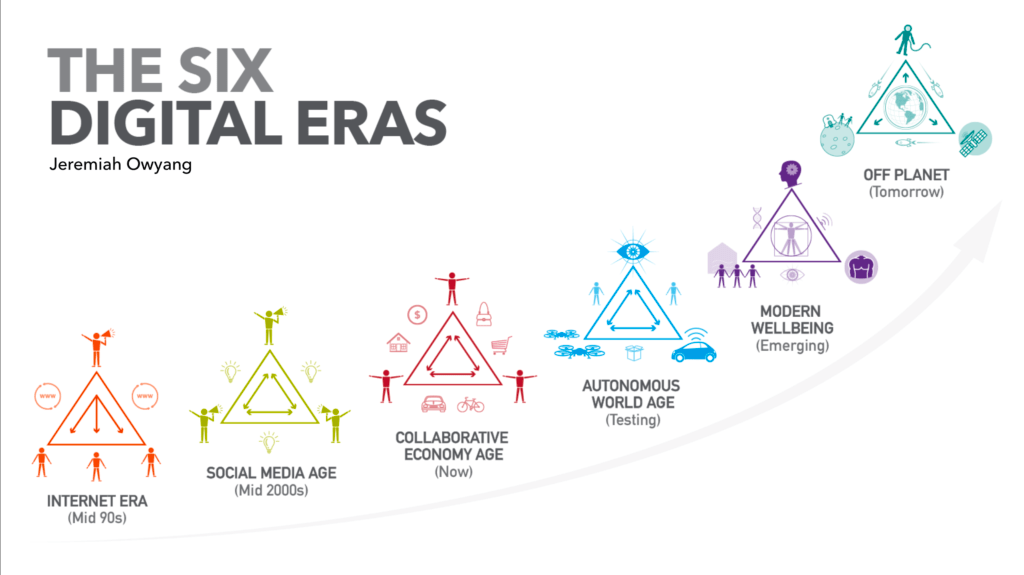
Data has helped us comprehend the natural world. It captures and monitors what our human senses cannot catch. This was how the internet started anyway. An algorithmic medium of spreading data, the internet was invented to create a mode of communication among the United States and its allied countries. Such top secret data was necessary for rival nations to not keep up with the Allied’s plans. The 1969 invention was revived in the late 1990s to be seen visually, birthing the Internet Age. The internet then involved spreading data in the form of personal communication. In the Social Media Age, social networking sites, namely Six Degrees (1997), Yahoo Messenger (1998), Friendster (2003), Skype (2003), Myspace (2003), Facebook (2004), Youtube (2005), Twitter (2006), and Omegle (2009) emerged. As the 21st Century continued, the internet didn’t just become a manner of communication. It was a medium of production and creation with the help of constant virtual interaction. The Collaborative Age saw the birth of G Suite, a cloud of different applications under Google, where users can collaboratively create documents (Google Docs), powerpoint presentations (Google Slides), spreadsheets (Google Sheets), websites (Google Sites), or a storage area (Google Drive). Additionally, applications Snapchat, Instagram, even Facebook created a feature where people in a certain location include a tag of the said location. The app would collate all posts into one tag, birthing a collaboration showing the different happenings in that certain location. Another popular example of such collaboration is when Youtubers collaborate with fellow Youtubers or people they know to create content that will entertain users. The internet has helped us utilize data to however we need it: casual interactions, work, academics, research, creativity, weight loss, travel guide, bookings, and everything in between. Its easy to say that we have controlled data to cater to our needs. However, as we go forward to the future, don’t you think its the other way around?

Twitter threads have influenced us to divide our attention to separated pieces of information. We take in information one by one and react to them one by one like a computer. Experts say we are already entering the Autonomous World Age. Human tasks are becoming more automated, tasks formerly done by people are now done by machines. Because of our growing reliance on machines, we have the tendency to put ourselves in their shoes, as our recurring goal is to make them do human labor. As we wire our brains into machines, its safe to say that the Modern Wellbeing Age is not far away. Losing track of our own humanity, we turn to technology to become more human. This age bears witness to apps that cater to physical, mental, emotional, spiritual, even sexual wellbeing. Runkeeper tracks weight loss and all other physical training. Headspace, Rootd, and Acupressure are notable anxiety applications. With our reliance on technology to explore the inner space is the same mindset in conquering the outer space. The Off Planet era may not be in the far future, as we have created an artificial [world] of the human and natural world. This artificial world we continue to curate wires our brains to be more robotic than human.
Our attention to data has affected how we communicate information. The media has adjusted to the signs of the times, creating content that minute yet jam-packed. Buzzfeed, 8List, and other media sites adopted a writing style called “Listing the vegetables” grouping information in the form of lists. The Philippine Daily Inquirer’s broadsheet front page has been designed in the style of a media browser, where news headlines are written in boxes, representing tabs of a website. Spotify provides different playlists, diving songs in different categories depending on the mood, and genre of each song. Our manner of communication has also been divided and categorized.
I bet you that this essay could be summarized in a Twitter thread. Data is the powerful weapon the 20th Century has produced and the 21st Century develops. The birth of the internet strengthened its power and wired us to think and function like data. This has changed the way we view and communicate information.
As the thread mentioned, “The internet is becoming more intimate and algorithmic.” As our exploration of the artificial world heightens, our human capacity to take in information becomes divided and categorized. Who knows what the rest of Silicon Valley has in store for us? All we have to do is press the Refresh button.
 Sonder.